

Personas
Overview
Personas are a fictional character or archetype that represent a specific group of users. Personas are typically created based on research at the earlier stages of the project, but can also arise over time, during the lifecycle of the project.
Personas help you to stay focused on real-world conversations when solving problems and developing features for your users.
They offer a litmus test that can be used during discussions when you are trying to figure out whether you are truly solving a problem for your users.
Create personas
You can create new personas from the personas panel, which can be opened using the Personas button in the side bar of the story map. You can also use the keyboard shortcut P.
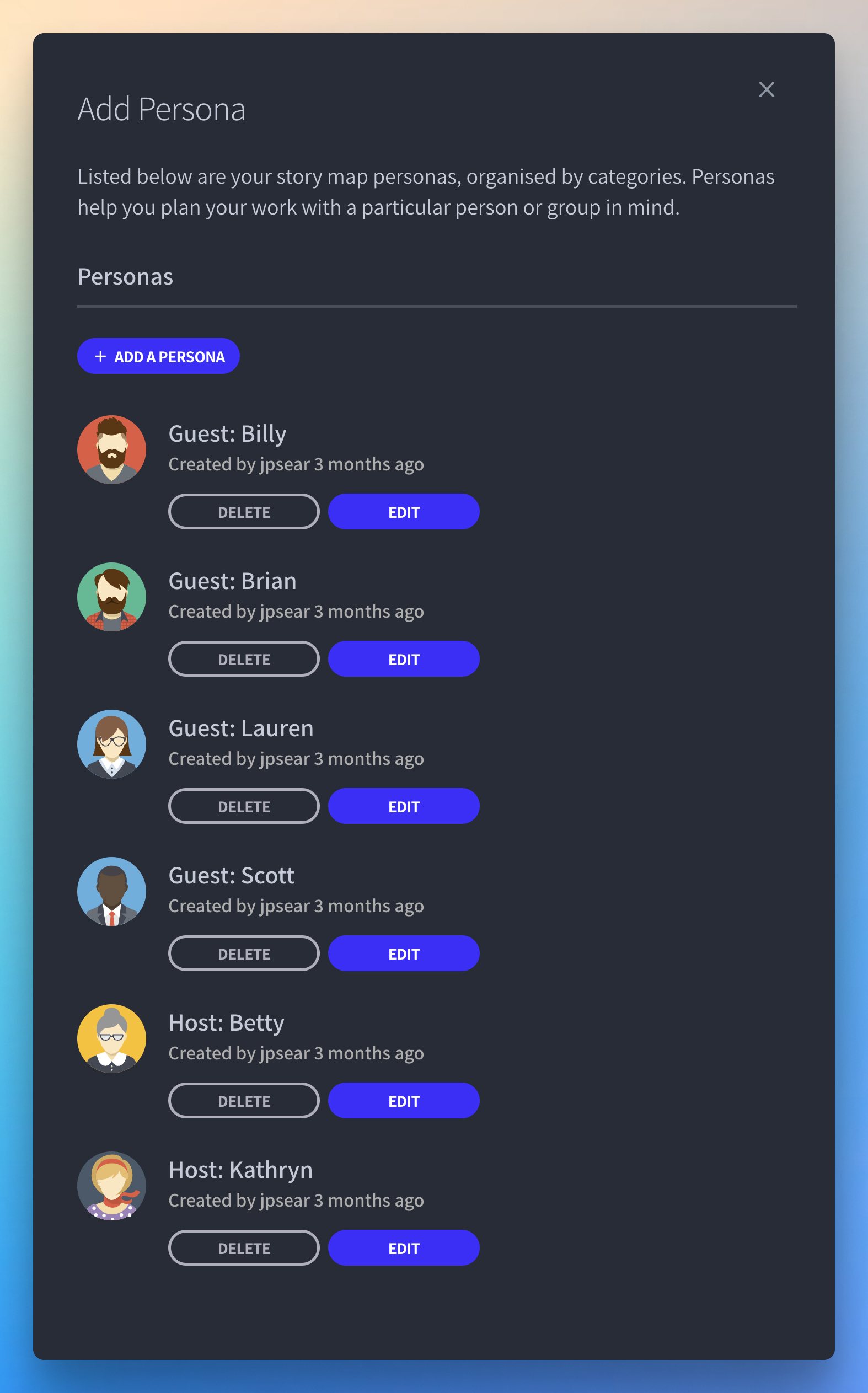
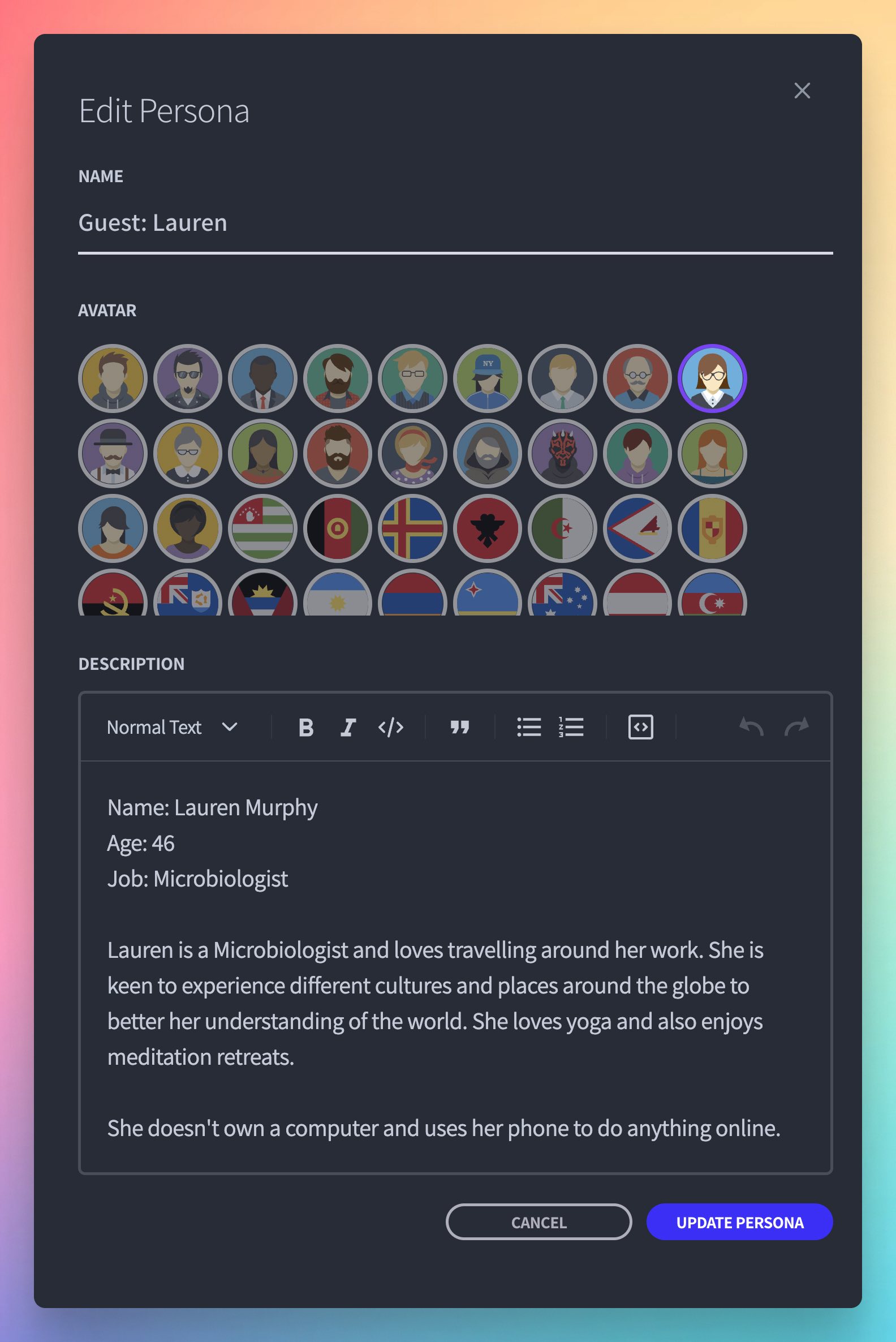
Personas can have a name, an avatar and a detailed description.
Assign personas
Once you've defined a couple of personas, you can assign them to journeys, step and stories using the context-menu of each. Try right-clicking on a journey to assign a persona:
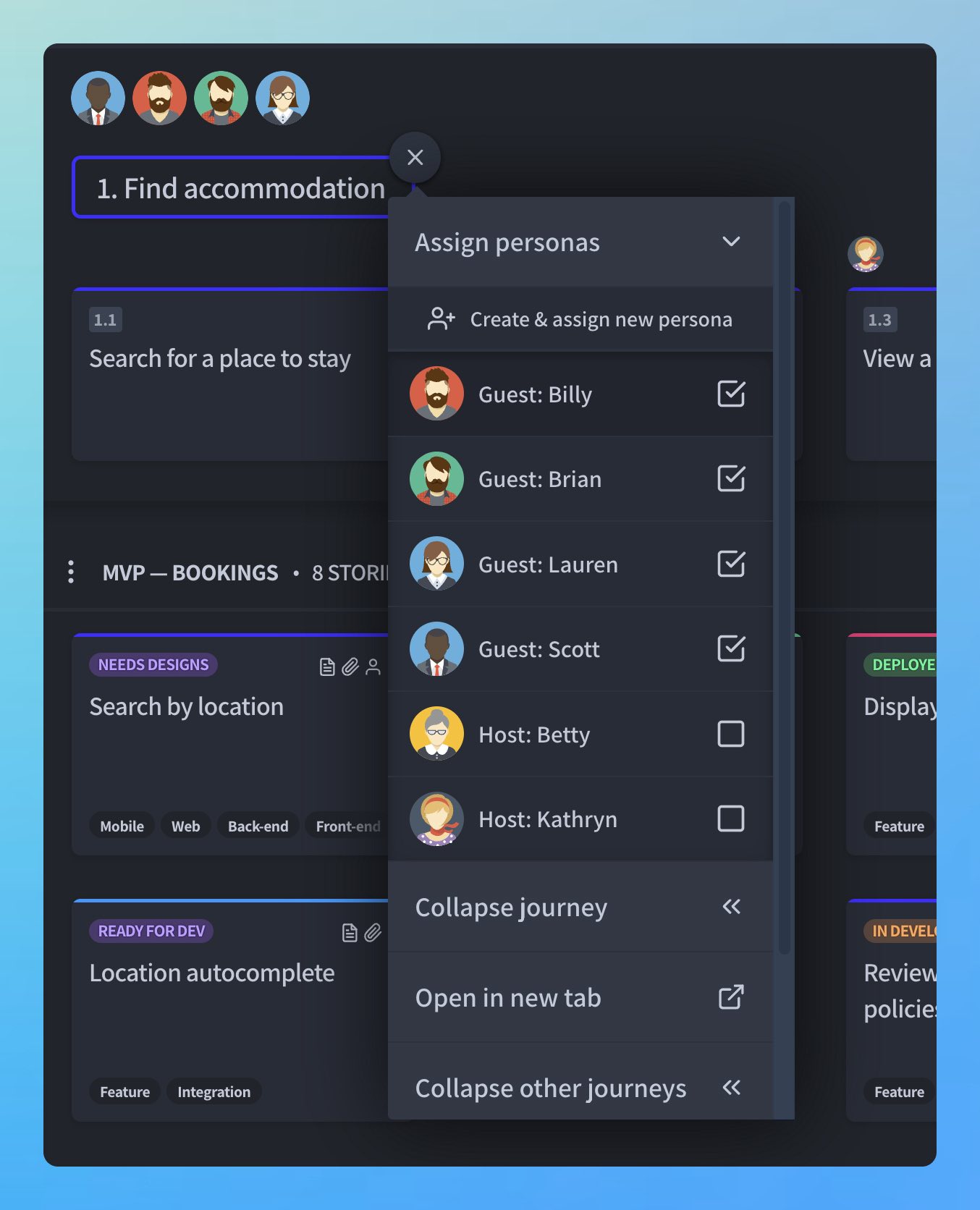
When assigned, personas will show up above journeys and above steps. For stories, personas are visible when you open the card.
Best practice
Assuming your backlog is being driven from the story map, personas are a crucial part of the planning process. Make sure that any upfront persona work done by your UX team is present in the story map, so you can keep getting value from personas whilst planning. It's all too easy to put the personas into online file storage and forget about them.